
Answer Engine Optimization | AEO/SEO-Institution Enterprises
BLUF: The Bottom Line Up Front
- Answer engine optimization (AEO) is the practice of structuring your content, data, and digital presence so AI systems like ChatGPT, Perplexity, Google AI Overviews, and Claude can easily extract, trust, and cite your business as the answer to a user’s question.
- Unlike traditional SEO, which optimizes for rankings on a results page, AEO optimizes for citation and inclusion inside a generated answer, often with zero click-through required.
- Winning at this requires structured data, entity clarity, authoritative sourcing, and content built in direct question-and-answer formats.
- Businesses that delay this shift risk losing visibility precisely when buyer research behavior has permanently moved upstream into AI conversations.keyword density.
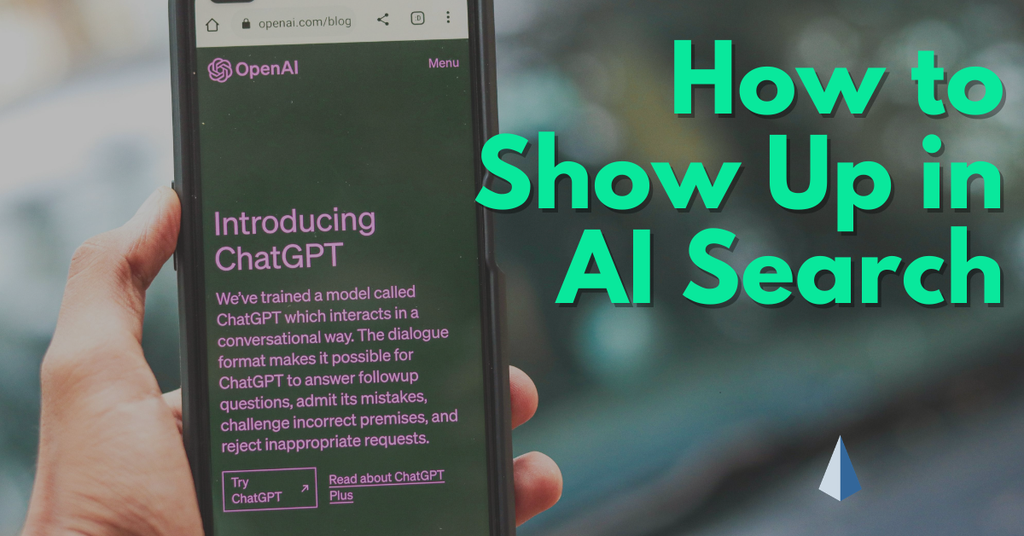
Google’s search results page isn’t the finish line anymore. It’s barely even the starting gun.
Right now, millions of buyers are asking ChatGPT, Perplexity, and Google’s AI Overviews for recommendations before they ever type a query into a traditional search bar. If your business isn’t showing up in those AI-generated answers, you’re invisible to an entire generation of decision-makers. That’s the gap answer engine optimization services are built to close.
There’s no “page two” in an AI answer. You’re in, or you’re invisible.
This isn’t a re-brand of SEO. It’s a fundamentally different discipline with different rules, different success metrics, and a different technical foundation. Let’s break down exactly what it is, why it matters, and how to execute it starting tomorrow.
Why Answer Engine Optimization Services Exist Now
Search behavior didn’t evolve gradually here. It cracked open.
Gartner predicts traditional search engine volume will drop 25% by 2026 as users shift to AI chatbots and virtual agents for information gathering. That’s not a niche trend. That’s a quarter of all search volume re-routing through a completely different interface with completely different optimization rules.
Here’s the uncomfortable part for a lot of business owners: ranking #1 on Google doesn’t guarantee anything in an AI answer. Large language models pull from a blend of crawled content, structured data, third-party citations, and pre-trained knowledge. Your beautifully designed homepage with vague marketing copy? An AI model can’t extract a clean answer from that. It’ll skip you and cite a competitor with a clearer FAQ page instead.
Answer engine optimization services exist to solve this exact problem: engineering your content and technical infrastructure so AI systems can parse, trust, and surface your business as the definitive answer.
The Core Mechanical Difference from SEO
Traditional SEO optimizes for ranking position. You compete for blue links on a page, and click-through rate is your currency.
AEO optimizes for extraction and citation. The AI model reads your content, decides if it directly and clearly answers the question, and either includes you in its response or doesn’t. There’s no “page two” in an AI answer. You’re in, or you’re invisible.
This changes everything about how content gets built. Long, meandering blog posts stuffed with keywords don’t help an LLM extract a clean answer. Direct, structured, well-sourced content does.
The Four Pillars of Effective AEO Execution
Every credible answer engine optimization program rests on four operational pillars. Skip one, and you’re leaving visibility on the table.
Pillar One: Structured Data and Schema Markup
AI crawlers and traditional search bots both rely heavily on structured data to understand context. Schema markup, the code that tells search engines “this is a product,” “this is an FAQ,” “this is a review”, is non-negotiable infrastructure now.
Implement these schema types immediately if you haven’t:
- FAQPage schema for any page answering common customer questions
- HowTo schema for process-based or instructional content
- Organization schema with complete NAP (name, address, phone) data and social profile links
- Product schema with pricing, availability, and review data for e-commerce
Google’s own structured data guidelines confirm that properly marked-up content has a materially higher chance of surfacing in rich results and AI-generated summaries. This is table stakes, not a nice-to-have.
Pillar Two: Content Architecture Built for Extraction
Here’s where most businesses get it wrong. They write content for humans scrolling a web page, not for a language model scanning for a direct, quotable answer.
Restructure your content using this format:
- Lead with a direct, one-to-three sentence answer to the implied question
- Follow with supporting detail, context, and nuance
- Use clear H2/H3 headers phrased as actual questions people ask
- Keep paragraphs short enough that a single paragraph can stand alone as a complete, citable answer
- Think of every section of your content as a potential standalone citation. If an AI model lifted just that one paragraph and used it as its entire answer, would it make sense? If not, rewrite it.
Pillar Three: Entity Clarity and Authoritative Sourcing
AI models weigh source credibility heavily. Harvard Business Review’s analysis of generative AI search behavior notes that these systems increasingly prioritize sources with established topical authority and clear entity signals over generic content farms.
Practical execution steps:
- Build out a robust **About** page with clear credentials, founding story, and team expertise
- Get cited by other authoritative sites in your niche — this is basically digital PR for AI trust signals
- Maintain consistent entity information (business name, description, expertise areas) across your website, Google Business Profile, LinkedIn, and industry directories
- Publish original research, data, or case studies that other sites will want to cite — this is the single fastest way to build the third-party citation signals AI models trust
Pillar Four: Conversational Query Mapping
People don’t type questions into ChatGPT the way they type keywords into Google. They ask in full, natural sentences, often with context and follow-up nuance.
Map your content strategy against actual conversational queries. Instead of targeting “best CRM software,” target “what CRM software works best for a 10-person sales team on a tight budget.” That specificity is exactly what conversational AI search rewards.
Institutional Case Study Framework: How a Mid-Market SaaS Company Executed AEO
Let’s walk through a realistic operational framework, structured the way an enterprise team would actually execute it.
The situation: A B2B SaaS company selling inventory management software noticed a 30% drop in organic demo requests over two quarters, despite stable Google rankings. Diagnostic review showed their target queries were increasingly triggering AI Overviews and chatbot responses that cited competitors. Not them.
Phase one: audit (weeks 1-2)
The team ran their top 50 commercial-intent queries through ChatGPT, Perplexity, and Google’s AI Overview to see who was getting cited and why. Pattern identified: competitors with clear, structured FAQ sections and published comparison data were winning citations. The SaaS company’s content was buried in narrative blog posts with no clean extractable answers.
Phase two: content restructuring (weeks 3-8)
Every core product page was rebuilt with a direct-answer format at the top, followed by supporting detail. FAQ schema was added to 40+ pages. A dedicated comparison hub was built (e.g., “Our Software vs. Competitor X”), formatted specifically for easy AI extraction with clear tables and direct verdict statements.
Phase three: authority building (weeks 6-12, run concurrently)
The company published an original benchmark report on inventory turnover trends, pitched it to three industry publications, and secured backlinks and citations from two of them. This created exactly the kind of third-party validation signal AI models weight heavily.
Phase four: measurement (ongoing)
Rather than tracking rankings alone, the team began manually sampling AI tool responses monthly for their target queries, tracking citation frequency as a core KPI alongside traditional organic traffic.
The result: Within one quarter, the company was being cited in AI-generated answers for 60% of their tracked query set, up from roughly 12%. Demo requests attributed to AI-referral traffic (tracked via referral string analysis) climbed steadily as visibility recovered.
The lesson here isn’t the specific tactics. It’s the operational discipline: audit first, restructure content for extraction, build real authority signals, and measure citation frequency as a distinct metric from rankings.
Advanced Operational Tactics for Scaling AEO
Once the foundational pillars are in place, here’s where sophisticated teams pull ahead.
Build a Structured Knowledge Base, Not Just a Blog
AI models favor content that reads like a reference document. Consider building a dedicated knowledge base or glossary section on your site — clearly defined terms, direct answers, minimal fluff. This becomes a citation magnet because it’s exactly the format LLMs prefer to pull from.
Monitor AI Platforms Directly, Not Just Search Console
Google Search Console won’t tell you if ChatGPT cited your business. Set up a manual or tool-assisted monitoring cadence, weekly or biweekly, where you query your top target questions across major AI platforms and log whether and how you’re mentioned. Several emerging AEO-specific monitoring tools now automate this, but manual spot-checks work fine for smaller operations.
Optimize for Multimodal and Voice Contexts
A growing share of AI queries come through voice assistants and multimodal interfaces. Content written in a natural, spoken-language cadence, the way you’d actually answer a question out loud, performs better in these contexts than dense, jargon-heavy copy.
Don’t Neglect Reddit, Forums, and UGC Platforms
McKinsey’s research on AI and consumer decision journeys has repeatedly highlighted how heavily generative AI models weight authentic, user-generated discussion when forming answers to comparison and recommendation queries. Being actively and authentically discussed on Reddit threads or niche forums is increasingly a legitimate AEO tactic, not just a branding nice-to-have.
Common Mistakes That Sabotage AEO Efforts
- Treating AEO as a one-time project: AI models retrain and re-crawl constantly. This requires ongoing maintenance, not a single sprint.
- Ignoring technical crawlability: If AI crawlers (GPTBot, Google-Extended, PerplexityBot) are blocked in your robots.txt, none of this matters. Audit your crawler permissions immediately.
- Writing answers that are too vague to cite: “It depends on your needs” is not an answer an AI model will extract. Be specific, be direct, be confident.
- Neglecting brand mention consistency: Fragmented or inconsistent business information across the web confuses entity recognition and weakens citation trust.
FAQ: Answer Engine Optimization Services
Is answer engine optimization the same as SEO?
No. SEO optimizes for ranking position on a search results page. AEO optimizes for being directly extracted and cited within an AI-generated answer, often bypassing the traditional results page entirely. They share some foundational tactics (structured data, authority building) but require distinct content formats and measurement approaches.
How long does it take to see results from AEO?
Most businesses see measurable shifts in citation frequency within 8-12 weeks of structured implementation, based on patterns similar to the case study above. Full authority-building efforts, like earning third-party citations, typically take longer — often a full quarter or more — to compound meaningfully.
Do I need to abandon traditional SEO to invest in AEO?
Absolutely not, and anyone telling you that is selling something. AEO and SEO share overlapping infrastructure: technical site health, structured data, authoritative content. Think of AEO as an additional layer of specialized execution on top of solid SEO fundamentals, not a replacement.
How do I measure ROI on answer engine optimization services?
Track citation frequency across major AI platforms for your target query set, monitor referral traffic patterns from AI tools where trackable, and watch for shifts in branded search volume, which often increases as AI-driven awareness grows. Traditional conversion metrics still apply once that traffic reaches your site.
Can small businesses realistically compete in AI search results?
Yes, often more easily than in traditional SEO. AI models reward clarity, direct answers, and genuine expertise over sheer content volume or domain authority alone. A well-structured FAQ page from a small business can outperform a bloated enterprise blog post if it answers the question more directly.
What tools support answer engine optimization work?
Schema markup generators, AI-platform citation trackers, and traditional technical SEO auditing tools all play a role. The tooling landscape here is evolving quickly, so prioritize process and content quality over any single platform.
Getting this right isn’t about chasing a trend. It’s about recognizing that buyer behavior has permanently shifted, and building the infrastructure to be visible wherever that behavior happens next.
Ready to Get Your Site Set Up for Answer Engine Optimization? Contact The Institution
Our goal is to see businesses thrive, and we believe the best way for your business to succeed is to provide the best solutions and information for your customers. We are happy to provide a COMPLIMENTARY website audit for you that will look at design and SEO/GEO/AEO, and give you an honest assessment for your consideration.
IF YOU WANT THE KEYWORDS/PHRASES, STRATEGY, AND SPECIFIC SCHEMA TO START RANKING, GET AI ATTRACTOR BUNDLE TODAY FOR JUST $47!!!! THIS MIGHT JUST BE THE BEST DEAL IN BUSINESS WHEN IT COMES TO SHOWING UP IN SEARCH.
We are also happy to build you an affordable, optimized for Google website, and manage your ongoing GEO. Actual ongoing GEO. Not the typical “set it and forget it” most agencies provide. Where we constantly analyze web traffic, search terms and trends, and Google best practices to shape your dynamic ongoing strategy.
If you want to learn more, please reach out!
Institution Enterprises provides expert business development consultation and support, specializing in AI integration, branding, web/digital development, SEO, and marketing.

Generative Engine Optimization-GEO
- ANSWER ENGINE OPTIMIZATION: The Complete Blueprint for Winning the AI Search Era
- AI SEARCH OPTIMIZATION FOR SMALL BUSINESS
- GOOGLE ISN’T THE FINISH LINE ANYMORE! HOW TO SHOW UP IN TODAY’S GEO SEARCH
- DO I REALLY NEED AN SEO STRATEGY NOW THAT THERE IS AI SEARCH?
- HOW TO: STARTING A BUSINESS RIGHT (Branding Should Come First)
Answer Engine Optimization | AEO/SEO-Institution Enterprises